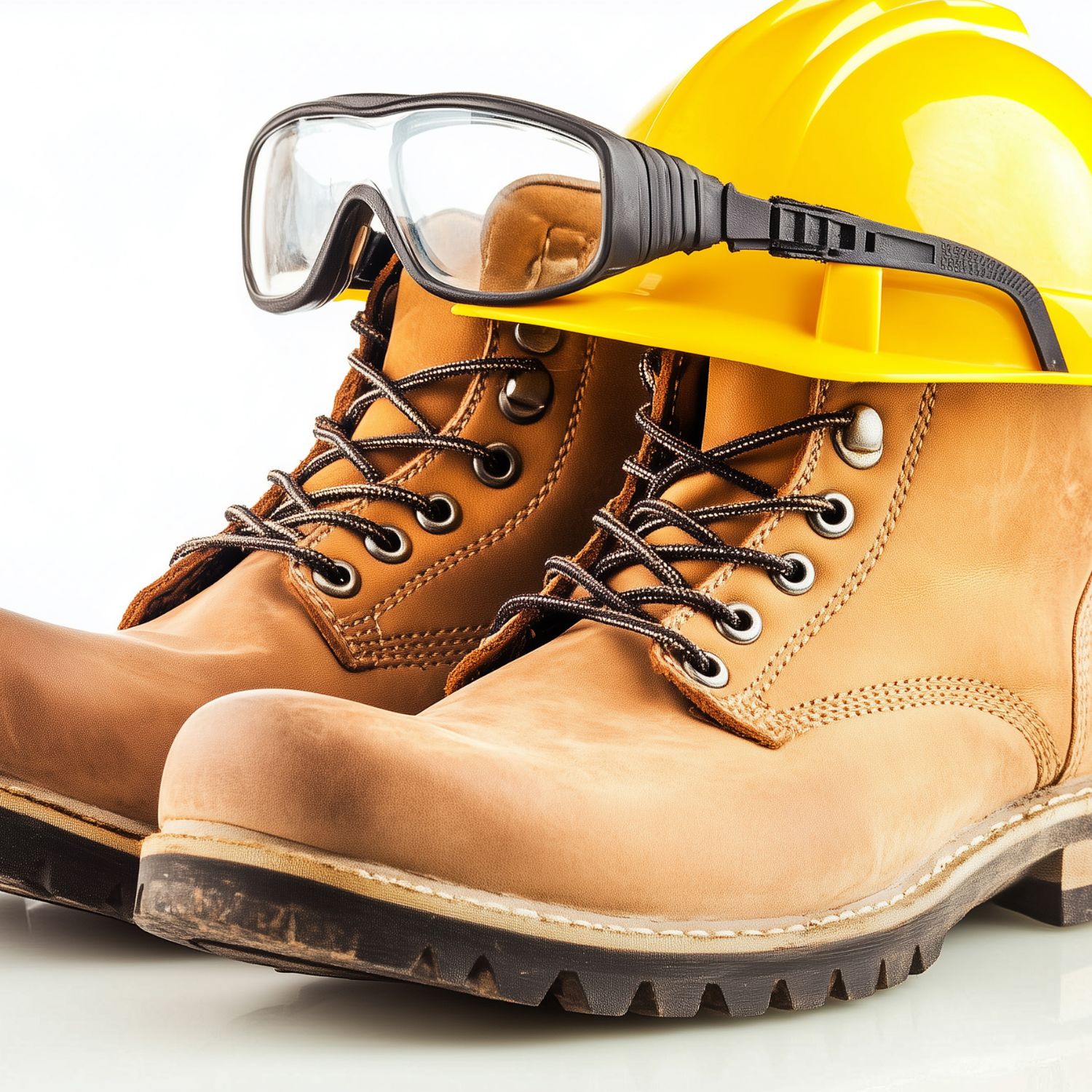
Personal Protective Equipment (PPE): Employer and Employee Responsibilities
From safety footwear and hard hats to gloves and eye protection, personal protective equipment (PPE) is used across many workplaces to help protect people from risks that cannot be adequately controlled in other ways.
However, simply handing an employee a pair of gloves or a hard hat isn’t enough.
Employers need to make sure PPE is suitable for the risks involved, fits the person using it and is properly maintained. Workers also need to understand why PPE is required, how to use it correctly and what to do if it becomes damaged or defective.
So, what are the rules around PPE in the workplace and what responsibilities do employers and workers have?
What Is PPE?
PPE stands for Personal Protective Equipment. It refers to equipment or clothing designed to protect someone against risks to their health or safety while at work.
Depending on the workplace and activity, PPE may include:
- Safety helmets and hard hats
- Protective gloves
- Safety footwear
- Eye protection and safety goggles
- High-visibility clothing
- Protective clothing
- Safety harnesses
Different hazards require different forms of protection, which is why PPE should be selected according to the specific risks associated with the work.
Some protective equipment is covered by other specific health and safety legislation. For example, much respiratory protective equipment (RPE) and hearing protection is subject to separate regulatory requirements, although many of the same principles around correct selection, use and training apply.
When Should PPE Be Used in the Workplace?
PPE is important, but it should not automatically be the first way of controlling a workplace hazard.
Employers should first consider whether the risk can be eliminated or adequately controlled through other measures. PPE is generally regarded as a last line of defence because its effectiveness depends on factors such as correct selection, fit and consistent use. HSE continues to emphasise that PPE should not be relied upon as the main way of controlling a risk where more effective controls are reasonably practicable.
For example, rather than simply giving employees eye protection against flying debris, an employer may also need to consider guarding, containment or a different method of working.
Where risks remain and PPE is required, the equipment provided needs to be suitable for the work and the person using it.
What Are an Employer’s Responsibilities for PPE?
Under the Personal Protective Equipment at Work Regulations 1992, as amended by the Personal Protective Equipment at Work (Amendment) Regulations 2022, employers have duties relating to PPE for employees and qualifying workers.
The 2022 changes extended the PPE duties to certain workers with a more casual employment relationship, commonly referred to as limb (b) workers.
Where PPE is required, employers need to consider matters including its suitability, maintenance, storage and correct use.
The PPE selected should also:
- Be appropriate for the hazard and working conditions
- Take account of the health and needs of the person wearing it
- Fit the wearer correctly
- Be compatible with other PPE being worn
- Be maintained in an efficient state, efficient working order and good repair
- Be appropriately stored when not being used
Compatibility is particularly important when several pieces of PPE are worn together. For example, safety glasses should not interfere with the fit or effectiveness of other protective equipment.
Does Your Team Understand How to Use PPE Correctly?
Providing PPE is only part of protecting your employees. Workers also need to understand when PPE is required, how to use it correctly, its limitations and how to identify and report problems.
Our flexible online PPE training helps employees build their understanding of personal protective equipment and its role in workplace safety.
Does an Employer Have to Pay for PPE?
Where PPE must be provided under the PPE at Work Regulations, workers must not be charged for it.
HSE guidance explains that employers cannot charge workers for required PPE or its storage, maintenance and replacement. They also cannot charge workers for the necessary training or instruction relating to its use.
This means the cost of necessary workplace PPE shouldn’t simply be passed on to the person who needs it to work safely.
Do Employees Need PPE Training?
Providing PPE doesn’t automatically mean it will be used effectively.
Where PPE is required, workers must receive sufficient information, instruction and training on its use.
Depending on the equipment and risk involved, workers may need to understand:
- Why the PPE is required
- When it should be worn
- How to put it on and use it correctly
- How to check that it fits properly
- The limitations of the PPE
- How to look after and store it
- How to identify defects or damage
- Who to report problems to
Training should be relevant to the equipment and risks workers actually encounter rather than being treated simply as a box-ticking exercise.
What Are Employees’ Responsibilities for PPE?
PPE safety isn’t solely an employer responsibility.
Workers should use PPE in accordance with the training and instructions they have received and make proper use of the storage arrangements provided.
Employees should also report problems such as damaged, defective, poorly fitting or missing PPE so that appropriate action can be taken.
A hard hat left in the van, safety glasses sitting on top of someone’s head or damaged gloves being used beyond their effective life will not provide the protection intended.

When Should PPE Be Replaced?
There isn’t one replacement period that applies to every type of PPE.
How frequently PPE needs replacing will depend on factors including the equipment itself, how often it is used, the conditions in which it is used, manufacturer information and its condition.
PPE should be properly looked after and maintained. Reusable equipment may also require cleaning and appropriate storage to keep it in good condition.
Workers should therefore be encouraged to check PPE and report defects, rather than assuming equipment remains suitable simply because it has not reached a particular age.
Common PPE Mistakes to Avoid
Even when the correct PPE has been purchased, simple mistakes can reduce the protection it provides.
Common issues can include choosing unsuitable PPE, wearing equipment incorrectly, using damaged PPE, poor fit, failing to maintain or clean reusable equipment and wearing several items together that interfere with one another.
Another important mistake is relying on PPE instead of considering whether the hazard could be controlled more effectively in another way.
PPE works best as part of a wider approach to workplace risk management, not as a substitute for it.
Help Your Employees Understand PPE
Effective PPE management is about more than supplying equipment.
Workers need to understand the risks they face, why particular PPE has been selected and how to use and look after it correctly.
Providing appropriate PPE information, instruction and training can help employees understand their responsibilities and make better use of the protection provided to them.