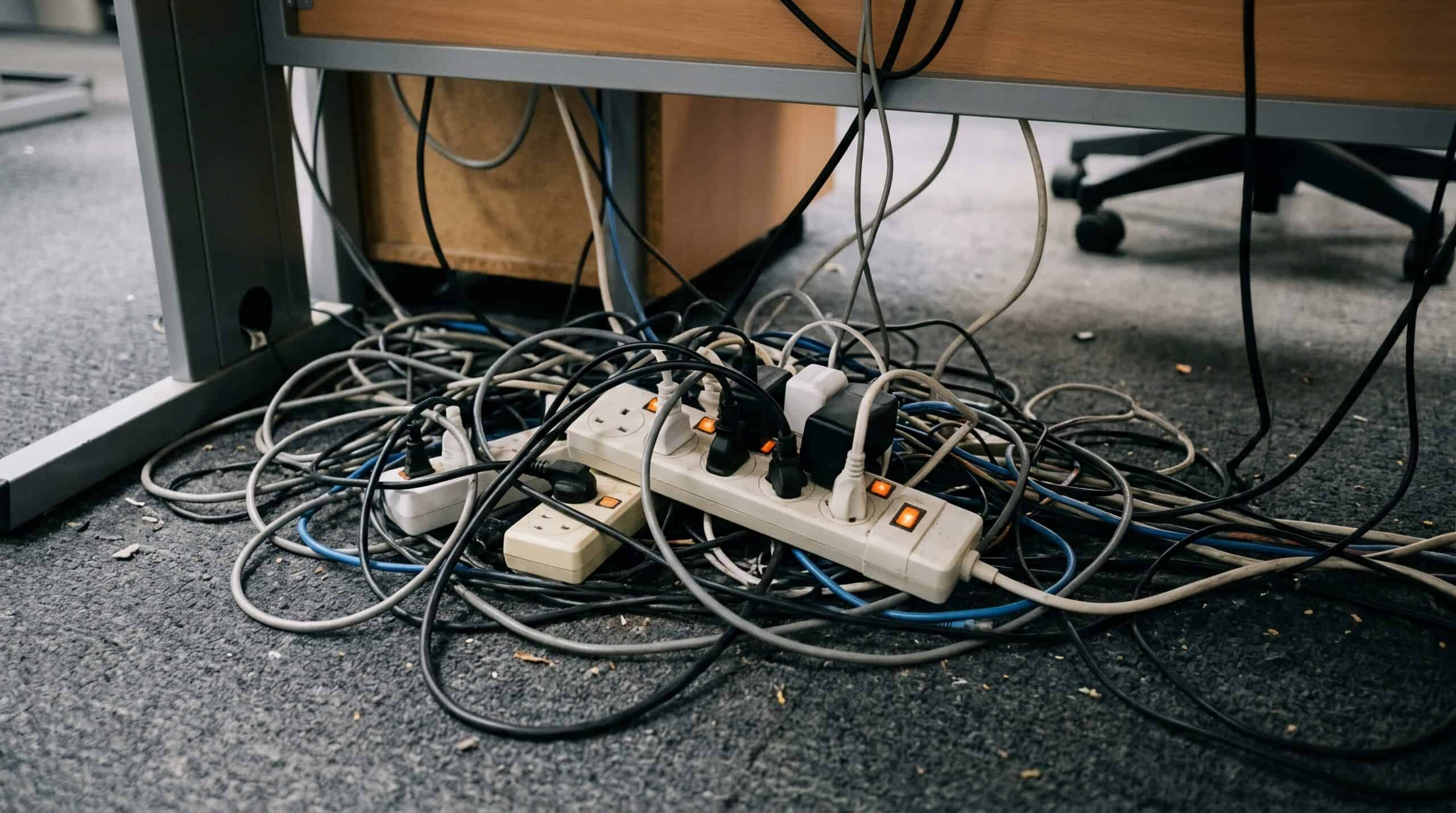
What Are the Most Common Causes of Workplace Fires?
Workplace fires can put lives at risk, damage premises and interrupt business operations. Although the hazards vary between offices, warehouses, workshops, hospitality venues and care settings, many fires involve familiar ignition sources, combustible materials or unsafe working practices.
Understanding the main causes helps employers identify hazards, put appropriate controls in place and ensure staff know what to do in an emergency. Below are common workplace fire risks and practical ways to reduce them.
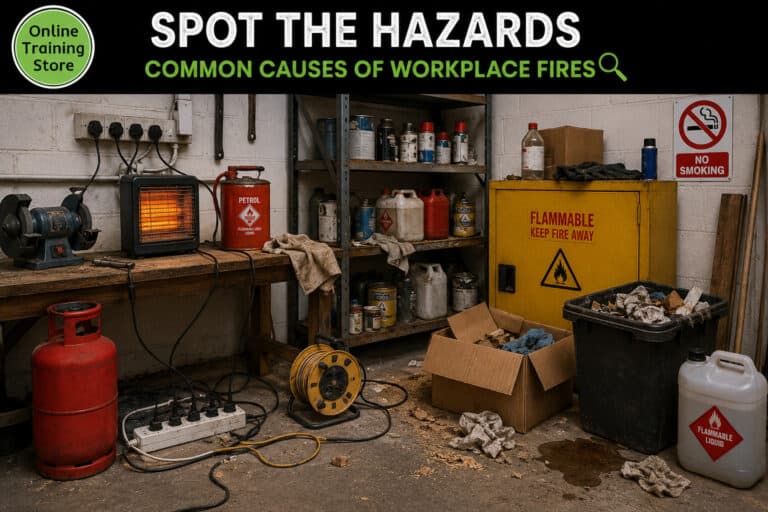
Can You Spot the Fire Hazards?
Before you read on…
Take a look at the image below and see how many potential fire hazards you can identify.
The answers are at the bottom of this article.
Common causes of workplace fires
1. Faulty or misused electrical equipment
Damaged cables, defective appliances, overloaded sockets and poorly maintained electrical installations can overheat or cause electrical faults. Equipment may also become hazardous when ventilation openings are blocked or unsuitable extension leads are used.
Reduce the risk by inspecting equipment before use, removing damaged items from service, avoiding overloaded sockets, and arranging suitable maintenance and inspection by competent people. Portable appliance testing is not automatically required annually for every appliance; inspection and testing should reflect the equipment and its risk.
2. Poor housekeeping and combustible waste
Cardboard, packaging, paper, dust and other combustible waste can help a small fire spread. Clutter may also obstruct escape routes and make emergency evacuation more difficult.
Remove waste regularly, keep escape routes clear, control combustible storage and maintain tidy work areas. Where dust or other process residues create additional hazards, assess and control them appropriately.
3. Flammable liquids, gases and aerosols
Solvents, paints, fuels, cleaning products and aerosols may ignite if stored or used near heat, sparks or naked flames. Some activities may also create explosive atmospheres.
Follow product safety information, use suitable containers and storage arrangements, minimise quantities at the point of use and assess relevant risks under the Dangerous Substances and Explosive Atmospheres Regulations 2002 (DSEAR) where applicable.
4. Cooking and kitchen equipment
Unattended cooking, grease build-up and faulty or poorly maintained kitchen equipment can start fires. Risks are particularly important in commercial kitchens, but staff kitchens also need sensible controls.
Keep cooking equipment clean, maintain extraction systems where applicable, supervise cooking and ensure staff know how to raise the alarm and evacuate safely.
5. Hot work, sparks and naked flames
Welding, cutting, grinding and soldering can ignite combustible materials, including those hidden behind walls or within nearby voids. Fires may develop after work has stopped.
Consider safer alternatives first. Where hot work is necessary, assess the area, remove or protect combustibles, use a suitable permit-to-work system where appropriate and provide monitoring during and after the task.
6. Heating equipment
Portable heaters and fixed heating systems can create fire hazards when poorly maintained, obstructed or placed too close to combustible materials.
Use suitable equipment, keep clearances around heaters, follow manufacturers’ instructions and prevent unauthorised or unsafe use.
7. Smoking materials and unsafe behaviours
Carelessly discarded smoking materials, wedged-open fire doors, blocked exits and failure to follow procedures can increase the likelihood or consequences of a fire.
Maintain clear smoking arrangements, provide suitable disposal facilities, communicate rules and encourage prompt reporting of hazards and defects.
How can employers prevent workplace fires?
In England and Wales, the Regulatory Reform (Fire Safety) Order 2005 requires the responsible person to take appropriate general fire precautions and ensure a suitable and sufficient fire risk assessment is carried out. Scotland and Northern Ireland have separate fire safety legislation.
A practical workplace fire prevention programme should include:
- A suitable and sufficient fire risk assessment, reviewed when circumstances change.
- Appropriate controls for ignition sources, fuels and hazardous activities.
- Safe storage, housekeeping and maintenance arrangements.
- Suitable fire detection, warning, emergency lighting and escape arrangements as identified by the assessment.
- Clear emergency procedures, staff instruction and training.
- Appropriate fire drills and arrangements for people who may need assistance evacuating.
- Checks and maintenance of fire safety measures, with issues corrected promptly.
Why is workplace fire safety training important?
Training helps employees recognise everyday fire hazards, follow prevention measures, raise the alarm and understand the evacuation procedure. People appointed to specific fire marshal or warden duties may need additional instruction and practical arrangements appropriate to their workplace.
For general employee awareness, see our Fire Safety Training course. For people with designated evacuation and fire marshal responsibilities, see our Fire Marshal Training course. Where the fire risk assessment identifies a need for staff to understand extinguisher selection and safe use, see our Fire Extinguisher Training course. Online training can support knowledge but does not replace site-specific instruction or practical competence where required.
Frequently asked questions about workplace fires
There is no single cause that applies to every workplace. Electrical faults and misuse, cooking, hot work, heating, smoking materials and poor housekeeping are all important hazards. The relevant risks depend on the activities and premises.
In England and Wales, the responsible person under the Fire Safety Order has duties relating to fire precautions and fire risk assessment. Employers also have responsibilities for employees and relevant people. Exact duties depend on the premises and legal arrangements.
It should be kept up to date and reviewed when there is reason to suspect it is no longer valid or where significant changes occur. There is no universal fixed annual review interval in the Fire Safety Order.
Employers must provide employees with adequate fire safety training when they are first employed and when exposed to new or increased risks, with suitable repetition where appropriate. The content should reflect their role and workplace arrangements.
The frequency should reflect the fire risk assessment and the premises. Government guidance commonly recommends at least one drill each year for many workplaces, but additional drills may be needed. Read our guide to workplace fire drill frequency for more detail.
Build a safer workplace
Preventing fires starts with understanding the hazards in your own workplace and making sure controls are followed every day. Review your fire risk assessment, address unsafe conditions and ensure employees understand their responsibilities.
Explore our online Fire Safety Training and Fire Marshal Training courses to support your team’s knowledge alongside your workplace-specific fire precautions.
Answers
Overloaded extension lead
Heater next to flammable materials
Poor storage of flammable liquids
Flammable liquid spill
Poor housekeeping
Trailing cables
Combustible waste
LPG cylinder stored incorrectly
Electrical equipment near combustibles
Fire risks not being managed